Thinking about buying a historic home in Druid Hills? You are not just shopping for square footage and finishes. You are buying into one of metro Atlanta’s most distinctive historic settings, where the streetscape, lot layout, mature trees, and early 20th-century architecture all play a role in what makes the neighborhood special. If you want to understand what to look for, what rules may apply, and how to plan wisely before you buy, this guide will help you walk in with clearer expectations. Let’s dive in.
Why Druid Hills stands out
Druid Hills has deep historic significance. The National Park Service describes it as Atlanta’s first suburb and a major example of Frederick Law Olmsted’s suburban design, conceived in the late 1880s and completed in 1905.
That history shows up in more than the homes themselves. In DeKalb County, the district’s character includes its curving street pattern, lot platting, mature tree canopy, and the Peavine and Lullwater creek system. In other words, when you buy here, you are buying into a broader cultural landscape, not just a single property.
Know which rules apply
One of the first things to confirm is where the property sits from a jurisdiction standpoint. Druid Hills spans more than one local jurisdiction, and that matters because the review path can differ depending on whether a home is in DeKalb County or in the City of Atlanta.
For homes in the DeKalb County local historic district, exterior work may require preservation review. DeKalb County requires a Certificate of Appropriateness before exterior alterations, construction, or demolition within local historic districts. That review is separate from standard building permits and inspections.
What usually does not need review
Interior changes that do not affect the exterior appearance are generally excluded from preservation review in DeKalb County. Ordinary maintenance or repair is also typically excluded.
That can be reassuring if you are planning to update kitchens, baths, or systems inside the home. Still, it is smart to verify the exact scope of your planned work before closing, especially if you are counting on renovations right away.
What to inspect before you buy
Historic homes can offer craftsmanship and character that are hard to find in newer construction. They can also come with age-related maintenance needs that deserve a closer look during due diligence.
In Druid Hills, DeKalb’s design guidance highlights several features that buyers should pay close attention to because they are important to the home’s historic character and long-term upkeep.
Masonry and exterior materials
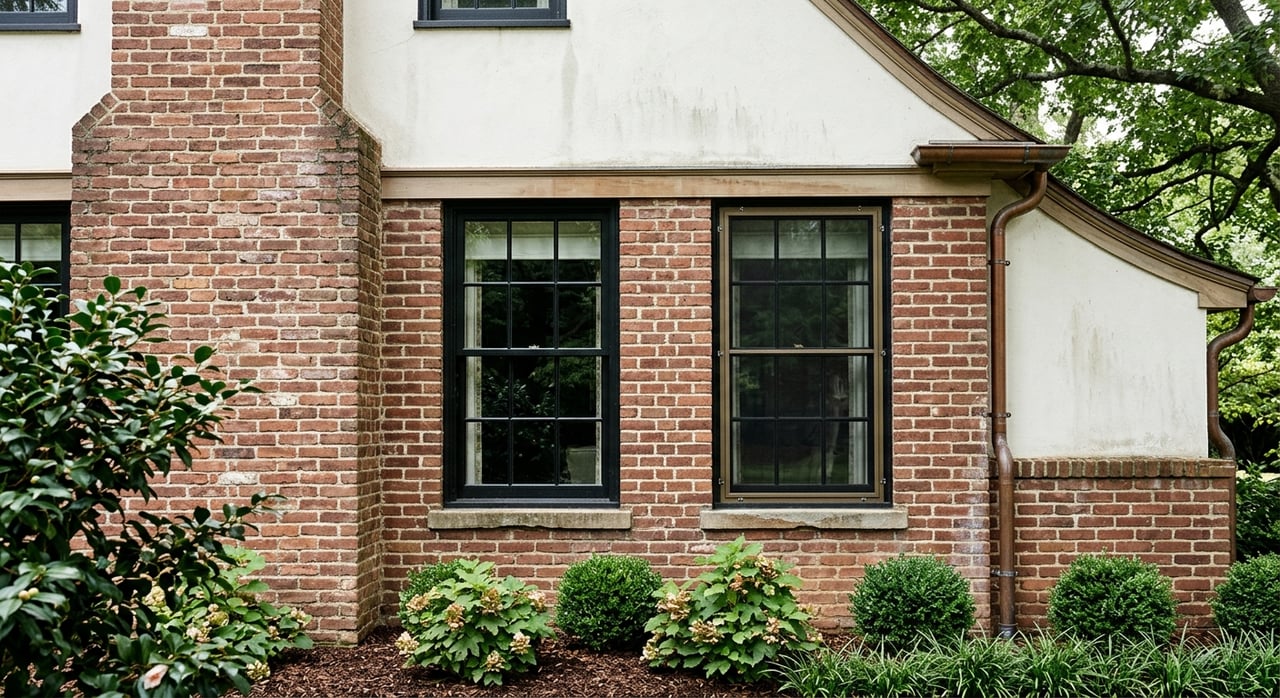
Brick is the dominant exterior cladding in Druid Hills, with stucco and wood also present. Fieldstone and granite often appear as accent materials.
When you tour homes, look closely at the condition of brick, mortar, stucco, and stone details. DeKalb’s guidelines favor retaining original masonry where possible, which means repairs may call for a more careful approach than a standard cosmetic update.
Windows, trim, and porches
Original window sashes, trim, porches, and steps are key features in many Druid Hills homes. The local guidance prefers repair rather than replacement when feasible and encourages replacement work that matches the original appearance, including divided-light patterns.
If a house has older windows or porch details, ask whether they have been repaired, replaced, or altered over time. That can affect both your maintenance budget and your future renovation options.
Roof form, gutters, and chimneys
Rooflines in Druid Hills vary widely and are part of the neighborhood’s architectural identity. DeKalb notes roof forms such as hipped, gabled, flat, parapet, cross-gabled, cross-hipped, jerkinhead, and gambrel, with many homes featuring slate or clay tile roofs.
Those materials and shapes can be beautiful, but they may also require specialized attention. Buyers should inspect roof condition, flashing, chimneys, and gutter systems carefully, especially because local guidance aims to preserve original roof forms and maintain original gutter appearance and placement when functioning properly.
Foundations and deferred maintenance
Older homes often show wear in ways that newer homes do not. A careful inspection should include the foundation, drainage, and signs of deferred maintenance around wood trim, masonry joints, porches, and exterior moisture management.
In a historic district, putting off repairs can create bigger costs later. If a home has multiple original features still intact, preserving them well may require a more thoughtful maintenance plan from day one.
Watch for health and renovation issues
If you are buying an older home, age alone should prompt a few extra questions. Homes built before 1978 are more likely to contain lead-based paint, according to the EPA.
If you plan to renovate, test first or use lead-safe precautions before disturbing painted surfaces. The EPA also notes that asbestos testing becomes especially relevant when material is damaged or will be disturbed during a remodel.
This does not mean every historic home is a problem. It means you should match your excitement about original features with a practical plan for safe inspection and renovation.
Plan renovations with compatibility in mind
A common misconception is that owning a historic home means you cannot change anything. In DeKalb County, the principle is not freezing a house in time. It is compatibility.
That means additions, exterior changes, and rehabilitation work should respect siting, setback, mass, scale, and materials. If you are thinking about expanding a home, replacing visible exterior features, or making site changes, it helps to understand that context before you buy.
Additions and exterior changes
Yes, additions can be possible. But they should be compatible with the historic form of the house and its setting.
DeKalb specifically discourages second-story additions on one-story porches that are visible from the public right-of-way. If a home seems like a candidate for expansion, that does not automatically mean every design idea will fit local review standards.
Window replacements and mechanicals
Window work often comes up early for buyers. In Druid Hills, exterior changes can trigger review, and local guidance prefers repair, in-kind replacement, and preservation of divided-light patterns.
Mechanical upgrades also need thoughtful placement. DeKalb recommends that air-conditioning and similar equipment not disrupt the principal elevation, which usually means front-facing visibility matters.
Solar projects and timing
If energy upgrades are part of your plan, expect a little more coordination. DeKalb notes that rooftop solar projects in historic districts can take longer and must follow additional historic-district requirements.
That does not rule out solar, but it does mean you should build more time into your planning. For buyers who want to renovate soon after closing, timing can be just as important as cost.
Energy efficiency can still be achievable
Historic homes are not automatically inefficient. The National Park Service notes that many historic buildings already have inherently efficient features and can be made more sustainable without sacrificing historic character.
In practice, that often means focusing on air leakage around windows and doors, insulation, HVAC performance, and weatherization. In Druid Hills, local guidance supports preservation-friendly approaches such as interior storm windows, careful window work, preserved roof forms, and unobtrusive mechanical placement.
If you want a more comfortable home with lower energy waste, the best path is often thoughtful upgrading rather than stripping out historic materials. That approach can help you protect both the home’s function and its character.
Historic incentives may matter
For buyers planning substantial rehabilitation, Georgia offers incentives that may be worth exploring. According to the Georgia Department of Community Affairs, the state income tax credit for rehabilitated historic property equals 25 percent of qualifying rehabilitation expenses, capped at $100,000 for a principal residence.
Owner-occupied homes that contribute to a local district or are locally designated as historic may qualify if the work meets the Standards for Rehabilitation and the substantial rehabilitation test. Georgia also has a preferential property tax assessment program that freezes the county assessment for about 8.5 years when value thresholds are met.
These programs are not a shortcut around preservation rules. But if you are buying with a serious renovation budget, they can be part of the financial picture.
Landscaping matters too
In Druid Hills, the setting around the house is part of the appeal. The mature tree canopy, historic lot pattern, and natural landscape features are treated as part of the district character.
That means landscaping decisions may carry more weight than buyers expect. DeKalb encourages tree replacement with identical or similar varieties, which is another reason to look at the site as carefully as you look at the house.
A smart buying strategy for Druid Hills
If you are serious about buying in Druid Hills, it helps to approach the process with both appreciation and discipline. Character is a major reason people want to live here, but that character comes with responsibilities.
A practical buying approach usually includes:
- Confirming whether the property is in DeKalb County or the City of Atlanta
- Reviewing whether local historic-district rules apply to the parcel
- Inspecting original materials and exterior features carefully
- Asking about past repairs, replacements, and approvals
- Budgeting for specialized maintenance where needed
- Planning extra time for exterior renovation review and permitting
For the right buyer, that extra homework is often worth it. Druid Hills offers an unusually intact historic streetscape, landscape, and architectural setting that newer neighborhoods simply cannot replicate.
If you want help evaluating homes in Druid Hills, understanding how a property fits into the neighborhood, or comparing renovation potential before you make an offer, Frank Golley can help you navigate the details with practical, local guidance.
FAQs
What makes a historic home in Druid Hills different from a typical older home?
- In Druid Hills, the historic value often includes not just the house, but also the streetscape, lot pattern, mature trees, and other landscape features that shape the neighborhood’s overall character.
What should buyers inspect first in a Druid Hills historic home?
- Buyers should pay close attention to masonry, windows, trim, porches, roof form, gutters, chimneys, foundations, and signs of deferred maintenance, since these features are important to both upkeep and historic character.
Do interior renovations in DeKalb County Druid Hills usually need historic approval?
- Interior changes usually do not need preservation review if they do not affect the home’s exterior appearance.
Do exterior changes in DeKalb County Druid Hills need approval?
- Yes, exterior alterations, construction, and demolition in DeKalb County local historic districts generally require a Certificate of Appropriateness before work begins.
Can buyers replace windows in a Druid Hills historic home?
- Often yes, but exterior changes can trigger review, and local guidance prefers repair, in-kind replacement, and preservation of original divided-light patterns when possible.
Can buyers add onto a historic home in Druid Hills?
- Additions may be possible, but they should be compatible with the home’s historic form, siting, mass, scale, and materials.
Are energy-efficiency upgrades possible in Druid Hills historic homes?
- Yes, preservation-friendly upgrades such as interior storm windows, weatherization, HVAC improvements, and careful air-sealing can improve comfort while protecting historic character.
Are there tax incentives for rehabilitating a historic home in Georgia?
- Georgia offers a state income tax credit for qualifying rehabilitation work and a preferential property tax assessment program for eligible historic properties, subject to program rules and thresholds.
