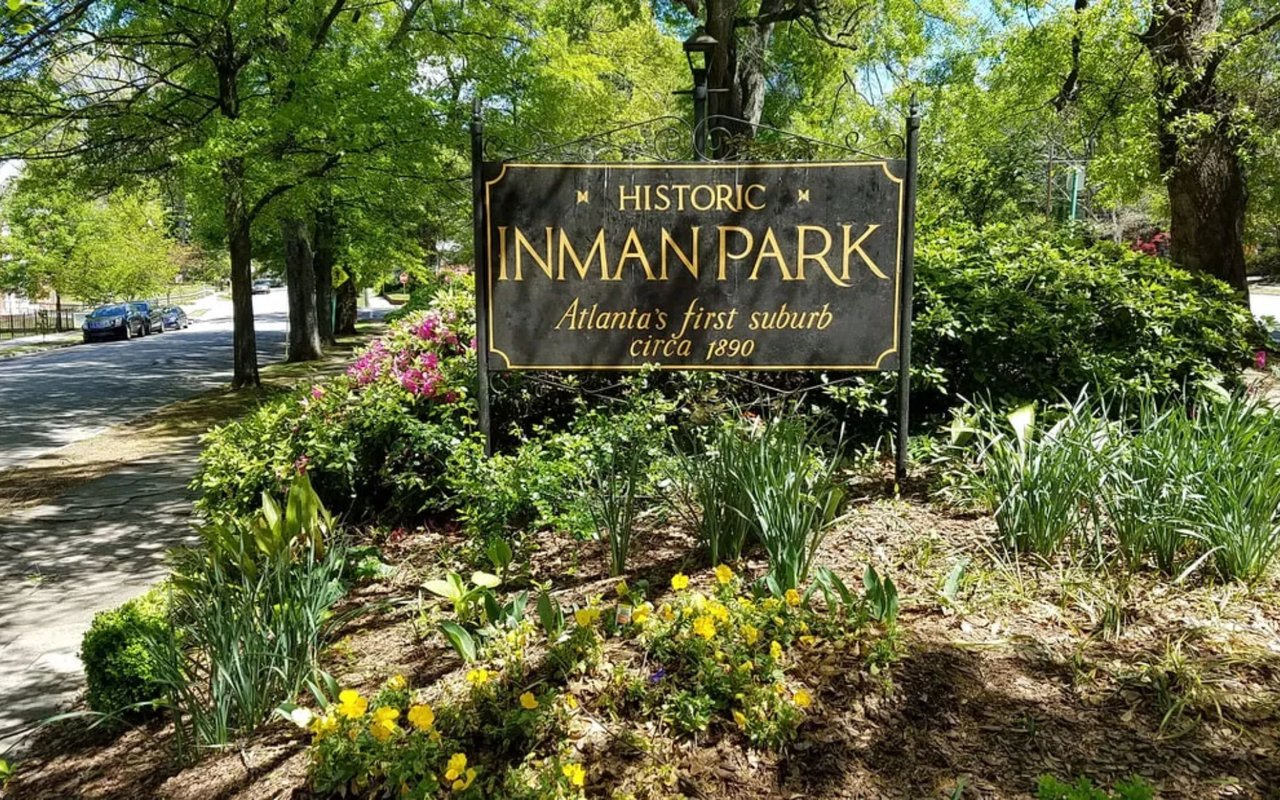
Located about two miles east of Downtown Atlanta, Inman Park is one of Atlanta’s most beloved historic intown neighborhoods. Known for its Victorian architecture, curved tree-lined streets, pocket parks, walkable dining, and quick access to Little Five Points, Krog Street Market, Candler Park, Poncey-Highland, and Virginia-Highland, Inman Park offers a distinctive blend of old Atlanta charm and modern city living.
The Inman Park Neighborhood Association describes the community as Atlanta’s first planned residential suburb and first electric trolley neighborhood. Built on land tied to Atlanta’s Civil War history, the neighborhood was designed with curving streets, generous lots, and green spaces that set it apart from Atlanta’s more traditional street grid.
A Brief History of Inman Park
Inman Park began taking shape in the late 1880s, when real estate developer and civil engineer Joel Hurt envisioned a garden-style suburb connected to Atlanta by electric streetcar. Hurt organized the East Atlanta Land Company to develop more than 130 acres east of the city and named the new suburb for Samuel M. Inman, an Atlanta businessman and Hurt’s friend and associate.
The neighborhood was planned as a refined residential community, with landscaped streets, parks, and large homes that reflected the architectural tastes of the late 19th and early 20th centuries. Over time, Inman Park experienced many of the same cycles as other intown Atlanta neighborhoods, including mid-century decline followed by significant preservation, restoration, and renewed investment.
Today, Inman Park is recognized not only for its architecture, but also for its strong neighborhood identity. The annual Inman Park Festival and Tour of Homes remains one of Atlanta’s signature spring events and is promoted as Atlanta’s largest all-volunteer festival.
Historic Homes and Architectural Styles in Inman Park
Inman Park’s housing stock is one of the neighborhood’s defining features. The area is known for some of Atlanta’s most impressive historic residential architecture, including Queen Anne, Colonial Revival, Shingle Style, Jacobean Revival, Romanesque Revival, Craftsman, bungalow, and other early 20th-century styles.
Buyers will find a wide range of property types throughout Inman Park, including:
- Restored Victorian homes
- Historic bungalows and cottages
- Craftsman-style homes
- Shotgun homes and smaller historic residences
- Townhomes and newer infill homes
- Condos and loft-style residences near Krog Street Market, Inman Park Village, and the Beltline
Many homes sit on smaller intown lots compared to suburban neighborhoods, but the tradeoff is walkability, architectural character, access to parks, and proximity to some of Atlanta’s most active dining and shopping districts.
Inman Park Home Prices and Market Trends
Inman Park is one of Atlanta’s more established and higher-demand intown neighborhoods, so pricing varies widely based on property type, size, condition, renovation quality, historic character, parking, lot size, and proximity to amenities like the Beltline, Krog Street Market, Little Five Points, and Freedom Park.
Rather than thinking of Inman Park as a single-price neighborhood, it is more helpful to view the market by property type. Condos and smaller attached homes may offer more approachable entry points, while renovated bungalows, historic homes, newer single-family homes, and larger restored properties often command premium prices. Recent market snapshots show one-bedroom and two-bedroom price points well below larger single-family homes, while single-family homes often reach the upper six figures and $1 million-plus range. Some larger or highly renovated properties can sell well above $2 million.
For buyers, Inman Park offers historic character, walkability, and strong intown convenience, but inventory can be limited and highly property-specific. For sellers, pricing strategy is especially important because condition, updates, architectural appeal, and location within the neighborhood can make a significant difference in buyer demand.
Parks, Trails, and Outdoor Space
Although Inman Park is known for walkability and restaurants, green space is also a major part of the neighborhood’s appeal. Residents enjoy access to Freedom Park, Springvale Park, neighborhood pocket parks, and nearby trail connections.
Freedom Park is described by the Freedom Park Conservancy as Atlanta’s largest linear park, with more than eight miles of multi-use paths connecting historic intown neighborhoods and cultural landmarks. The park provides space for walking, running, biking, public art, and everyday outdoor recreation.
Inman Park also benefits from easy access to the Atlanta Beltline Eastside Trail. The Beltline connects residents to popular destinations such as Krog Street Market, Ponce City Market, Old Fourth Ward, and other eastside neighborhoods.
Shopping, Dining, and Neighborhood Lifestyle
Inman Park offers some of Atlanta’s best access to dining, shopping, and neighborhood entertainment. Krog Street Market, located in the heart of Inman Park, brings together restaurants, market stalls, and local vendors in a restored historic warehouse setting.
The neighborhood is also close to Little Five Points, one of Atlanta’s most eclectic shopping and entertainment districts, as well as Virginia-Highland, Poncey-Highland, Candler Park, and Old Fourth Ward. This location gives residents quick access to independent shops, coffeehouses, restaurants, live music, festivals, parks, and trail-oriented recreation.
For many residents, the appeal of Inman Park is the ability to enjoy a historic residential neighborhood while still being close to the energy of the city.
Schools Serving the Inman Park Community
Inman Park is part of Atlanta Public Schools. Because school attendance zones are tied to a specific legal address and can change over time, buyers should verify current school assignments directly through the APS School Zone Locator before making decisions based on school zoning. APS notes that official school boundaries are established by the Atlanta Board of Education and are determined by a student’s bona fide primary residence.
Families considering Inman Park may also explore charter, private, independent, and specialized school options throughout metro Atlanta. As always, it is helpful to visit schools, review current programs, and confirm commute times as part of the home search process.
Local Amenities and Community Resources
Community involvement is a major part of Inman Park’s identity. Residents can stay connected through the Inman Park Neighborhood Association, which shares updates on neighborhood meetings, events, planning issues, and community initiatives. Inman Park is also part of NPU-N, which includes nearby neighborhoods such as Candler Park, Druid Hills, Poncey-Highland, Reynoldstown, Lake Claire, Cabbagetown, and Little Five Points.
Between its historic architecture, walkable streets, green space, Beltline access, and active neighborhood culture, Inman Park remains one of Atlanta’s most distinctive intown communities.
Thinking About Buying or Selling in Inman Park?
If you’re considering buying or selling a home in Inman Park or anywhere in Intown Atlanta, Golley Realty is here to help you navigate the market with clarity and confidence. As a trusted, family-owned real estate brokerage serving Atlanta since 2001, we bring local knowledge, thoughtful guidance, and a low-pressure approach to every move.
Contact Golley Realty today to start the conversation.
