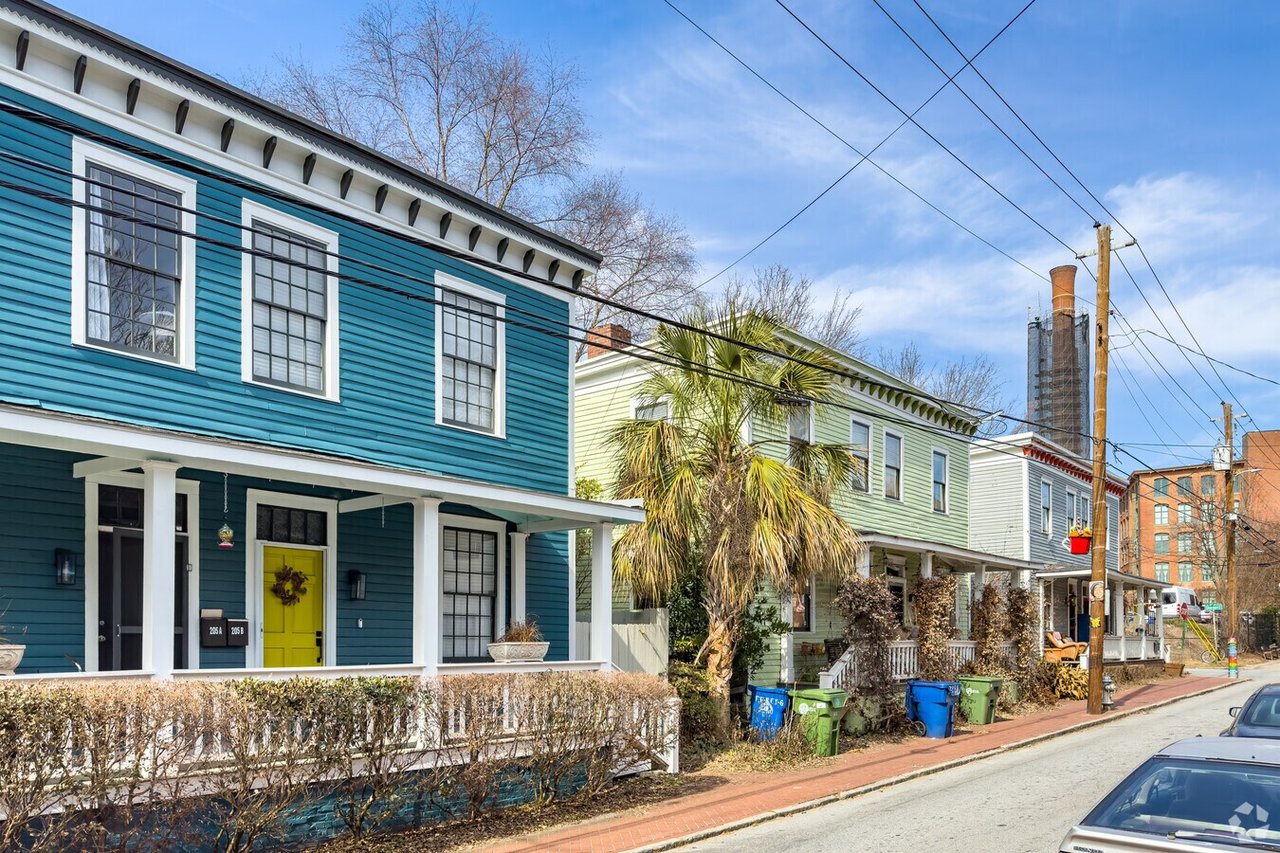
Located just east of downtown Atlanta, Cabbagetown is a compact historic neighborhood known for its colorful mill cottages, front porches, public art and old cotton mill smokestacks. It borders Oakland Cemetery, Grant Park, Reynoldstown and Inman Park, with convenient access to Memorial Drive, the Atlanta Beltline and Krog Street Market.
Cabbagetown is best experienced on foot. Within a few blocks, you might pass brightly painted shotgun houses, neighbors visiting on their porches, a new message inside the Krog Street Tunnel, children playing in Cabbagetown Park and diners gathered around sidewalk tables on Carroll Street.
Buyers are drawn to the neighborhood’s architectural character, walkability and creative energy. Lots are compact, homes sit close together and parking can be limited, but those qualities also help create the neighborly atmosphere that makes Cabbagetown distinctive.
Frank’s Fast Take
“The original small shotgun mill houses remaining from the early founding of the area have so much charm but are tiny. The area features tight lots and narrow streets that provide a wonderful sense of community. Cabbagetown has gone through a rapid transformation, so pricing has increased with the revitalization. My favorite nearby dining spot is Home grown for breakfast or lunch, and Cabbagetown’s hidden gem is the many colorful murals reaching from the Krog Tunnel toward Reynoldstown.”
— Frank Golley, Broker and Owner, Golley Realty
A Brief History of Cabbagetown
Cabbagetown developed around the Fulton Bag and Cotton Mill, which Jacob Elsas opened in 1881. Elsas recruited workers from the Appalachian communities of North Georgia and built housing around the mill for employees and their families.
Between 1881 and 1922, rows of wood-frame cottages and shotgun houses appeared along streets such as Reinhardt, Carroll, Berean, Gaskill, Savannah and Tye. Because the mill provided housing, healthcare, childcare and other services in addition to employment, Cabbagetown developed as a close-knit community within the larger city.
The mill was sold in 1957 and closed in 1977. Artists and other newcomers began moving into the neighborhood during the 1980s, attracted by its affordable cottages, industrial spaces and unconventional atmosphere.
The mill was later converted into residential lofts, preserving its brick buildings, smokestacks and other industrial features. Cabbagetown and the mill complex were listed on the National Register of Historic Places in 1976.
Even the neighborhood’s name comes with local folklore. One story credits produce wagons that sold cabbage outside the mill gates. Another says residents grew cabbage in their yards and that the smell of it cooking drifted through the village. Whatever its exact origin, the name became a source of neighborhood pride.
Homes and Architectural Styles
Cabbagetown has one of Atlanta’s most recognizable collections of historic worker housing. Home styles include shotgun houses, gabled-ell cottages, Queen Anne cottages, pyramid cottages and early 20th-century bungalows. Victorian details often appear around porches, doors, windows and front gables.
The classic shotgun house is one room wide and several rooms deep, typically with a front porch facing the street. Some of the oldest surviving homes were built between 1886 and 1892 along Reinhardt Street.
Many properties have been restored or expanded with updated kitchens, primary suites, offices and outdoor living areas. Others retain smaller footprints and more traditional layouts. Buyers looking for large yards, garages or substantial privacy will find fewer options here than in many Atlanta neighborhoods.
The former mill offers a completely different style of living. The Stacks and Fulton Cotton Mill Lofts feature exposed brick, large factory windows, tall ceilings and open floor plans.
Because Cabbagetown is a locally protected landmark district, many exterior alterations, additions and new construction projects require a Certificate of Appropriateness. Buyers considering renovations should review the neighborhood’s historic preservation requirements before beginning a project.
Cabbagetown Home Prices
Cabbagetown home prices vary because neighborhood sales include small cottages, renovated historic homes, newer construction, condominiums and industrial lofts.
Smaller condos and lofts may sell from the upper $200Ks into the $400Ks. Small cottages or homes needing updates may begin in the upper $300Ks or $400Ks. Renovated homes frequently reach into the $800Ks, while larger or highly customized properties can exceed $1 million.
For cottages, value is influenced by condition, parking, outdoor space, architectural details and renovation quality. Loft and condo buyers should also review association fees, reserves, insurance, assessments, rental restrictions and assigned parking.
Schools Serving Cabbagetown
Cabbagetown is served by Atlanta Public Schools. Schools commonly associated with neighborhood addresses include Parkside Elementary School, Martin Luther King Jr. Middle School and Maynard H. Jackson High School.
Because attendance zones can change, buyers should verify the current assignment for a specific property using the Atlanta Public Schools School Zone Locator.
Parks, Trails and Outdoor Recreation
Cabbagetown Park is the neighborhood’s central gathering space. The property was once occupied by Grant Park Primary School, which closed in 1981. When the land became available for redevelopment, residents organized to preserve it as public greenspace.
Today, the park includes an open lawn, mature trees, a playground and areas used for concerts, festivals and children’s activities. The adjacent Cabbagetown Community Center provides meeting rooms, an artists’ workshop, a deck, picnic space and a small tea garden.
The Cabbagetown Community Garden on Berean Avenue has 32 plots maintained by more than 30 members. Neighbors helped clear the site, construct its cedar fence and prepare the planting beds.
Nearby Oakland Cemetery offers gardens, walking paths, history tours and seasonal events. Residents can also access the Eastside and Southeast sections of the Atlanta Beltline for walking or biking toward Krog Street Market, Inman Park, Old Fourth Ward, Reynoldstown and Glenwood Park.
Street Art and Community Traditions
The Krog Street Tunnel is both a transportation connection and a constantly changing public canvas. It links Cabbagetown with Inman Park and helps connect sections of the Atlanta Beltline around Hulsey Yard.
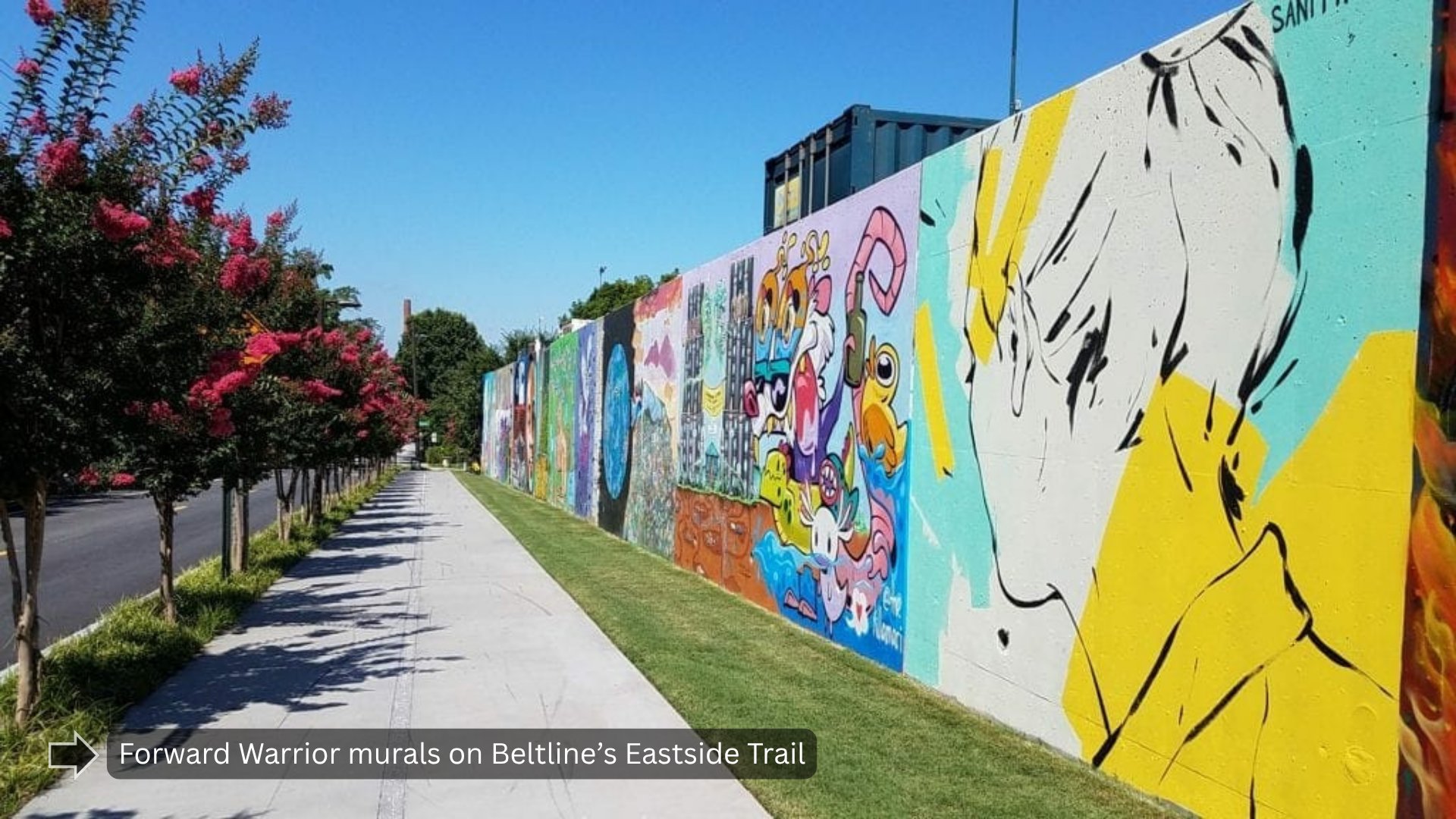
An insider distinction is that the art inside the tunnel and the murals outside it are managed differently. The inside is a free wall where artwork, announcements and messages may change overnight. The large murals along Wylie Street are part of a curated public-art program. If you find a favorite piece inside the tunnel, take a picture because it may be gone the next time you visit.
Forward Warrior brings invited artists together to create and refresh murals along Wylie Street. During the weekend of Sept. 18-20, 2026, artists are expected to add 80 new murals along Wylie and Tennelle streets, with a new Friday-night program featuring projection mapping and the Words on Wylie poetry showcase. Learn more about the upcoming murals and festival from Urbanize Atlanta.
The Cabbagetown Neighborhood Improvement Association holds regular meetings and works with local organizations on parks, preservation, transportation, cleanups and neighborhood events. Cabbagetown even publishes its own monthly newspaper, the Cabbagetown Neighbor.
The best-known annual event is Chomp & Stomp, held on the first Saturday in November. The festival includes a chili cook-off, 5K, live music, an artist market, Cabbage Games and porch performances. Proceeds support the neighborhood’s parks, greenspaces and Community Center.
The Cabbagetown Concert Series also brings free outdoor performances to the park in spring and fall.
Shopping, Dining and Everyday Conveniences
Carroll Street functions as Cabbagetown’s small-town main street. It is narrow, quirky and lined with cottages, porches, sidewalk tables and longtime neighborhood businesses.
Little’s Food Store has served Cabbagetown in some form since 1929. It is part corner store, part grill and part neighborhood institution, known for burgers, hot dogs and its “Be Nice or Leave” sign.
Carroll Street Café is a cozy Bohemian bistro popular for brunch, coffee, cocktails and sidewalk dining. Its tables offer a good spot for people-watching and observing the occasional driver attempting two-way travel on a narrow one-way street.
JenChan’s combines Chinese, Southern and other culinary influences in a relaxed restaurant filled with artwork and personality. Milltown Arms Tavern is the neighborhood pub for wings, burgers, cold beer and sports.
Near the Krog Street Tunnel, 97 Estoria offers casual bar food and a popular patio. At the edge of the neighborhood, Petit Chou serves French-influenced breakfast, brunch and lunch in a converted service station.
For additional shopping and entertainment, residents can walk or bike to Krog Street Market. Publix, AMC and other everyday services are nearby at Madison Yards, while Atlanta Dairies includes The Eastern music venue, Three Taverns Imaginarium and several dining options.
Location and Access to Atlanta
Cabbagetown is approximately two miles east of downtown Atlanta, convenient to Georgia State University, Grady Memorial Hospital, the State Capitol and downtown offices and entertainment venues.
Memorial Drive and Boulevard provide the primary routes through the area, with I-20 access nearby. The King Memorial MARTA station, served by the Blue and Green rail lines, is within walking distance of much of the neighborhood. The Inman Park/Reynoldstown station is another option, and MARTA Bus Route 21 travels along Memorial Drive.
Many cottages do not have garages or driveways, so buyers with multiple vehicles should investigate parking at a particular property. The rail corridor and Hulsey Yard also border the neighborhood. Visiting a home at different times of day can help buyers understand traffic, train noise and nearby business activity.
Thinking About Buying or Selling in Cabbagetown?
Cabbagetown offers historic cottages, industrial lofts, public art, local restaurants and a strong sense of place within a few minutes of downtown Atlanta. Its personality is found in the details, from the porches and mill smokestacks to the constantly changing Krog Street Tunnel.
If you’re considering buying or selling in Cabbagetown, Decatur, Intown Atlanta or anywhere in metro Atlanta, Golley Realty is here to help you understand the local market and make informed decisions. Reach out anytime for a friendly, no-pressure consultation.
